
Social impact
Professional inspection protects people.Data shows where that protection needs to reach.
DEFIS PRO turns professional inspection data into intelligence that supports decisions and strengthens the protection of society.
The platform makes it possible to understand where inspection is present, which services and professionals were inspected, which irregularities were identified and where situations call for greater institutional attention.
By connecting inspection, territory and indicators, Councils can identify populations potentially reached, territories that demand greater attention and situations that may call for new actions, institutional prioritization or referral to the competent authorities.
Turning inspection into intelligence to act where society needs it most.
DEFIS PRO · INDICATORS
From field work to data-informed decisions.
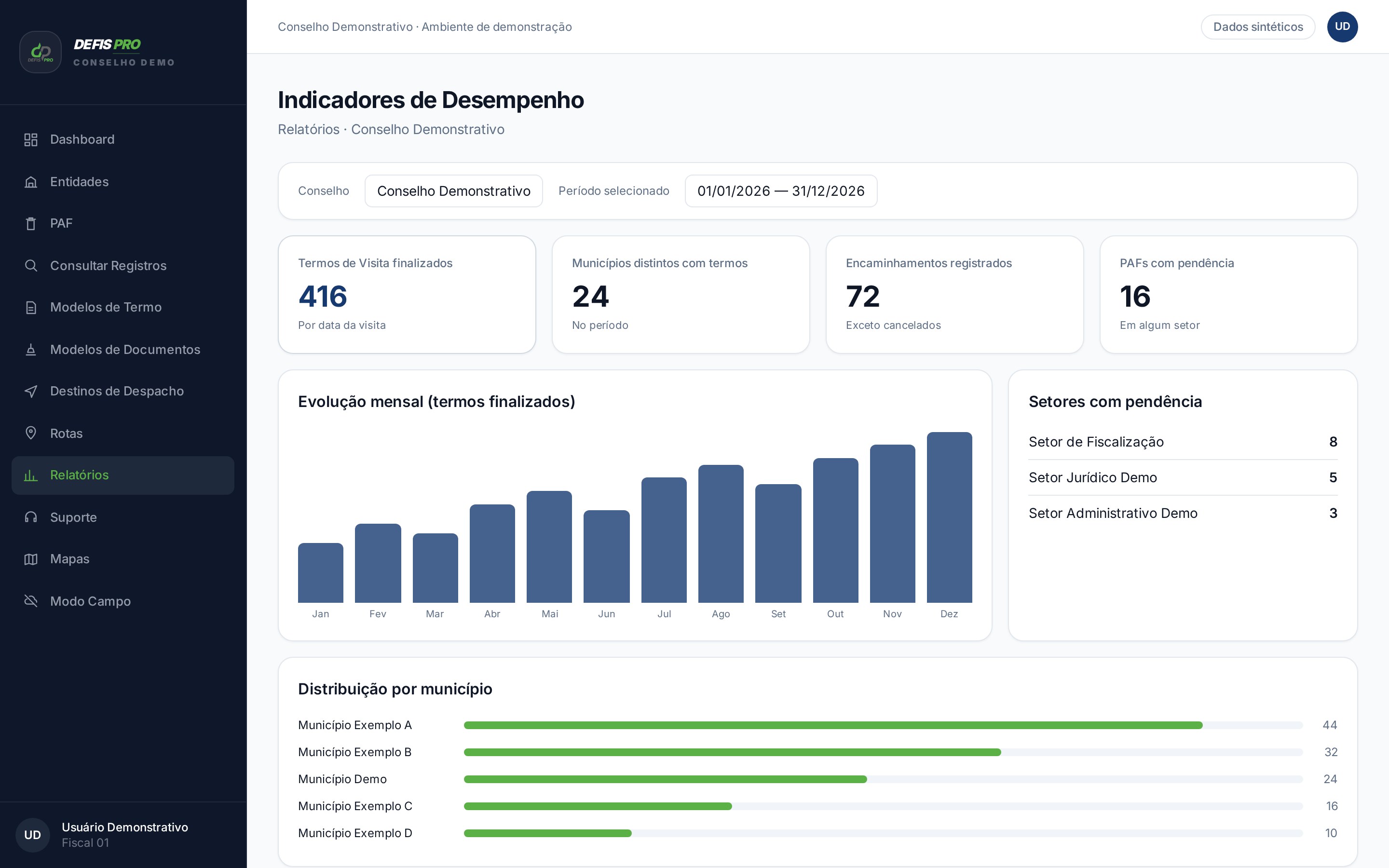
The platform brings together inspection indicators, including actions carried out and territorial distribution, to support institutional analysis and decisions.
- 01Inspection
- 02Evidence
- 03Territorial intelligence
- 04Identification of risks and gaps
- 05Institutional action
- 06Protection of society
The effect on people depends on institutional action; this screen shows operational indicators, not measured social outcomes.
Coverage
Who is being reached?
View the territorial distribution of inspection actions and produce indicators that support the analysis of the population potentially reached by institutional work.
Risk and priority
Where is greater attention needed?
Identify territories, services, occurrences and patterns that may signal a need for greater attention, supporting the planning and prioritization of inspection actions.
Institutional response
Turning information into action.
Organize data and evidence to support the Council's own measures and, where appropriate, the referral of information to the competent authorities, within their respective mandates.
Protecting society
Professional inspection, evidence and institutional coordination.
Professional inspection helps protect society by verifying professional practice and producing evidence about situations found in the field. Once structured and analyzed, this information can support the identification of risks, territorial inequalities and situations that call for institutional action.
When a situation goes beyond the Council's mandate, structured data and evidence can support communication with the competent authorities, respecting the responsibilities of each institution.
What exists today and what is evolution
What DEFIS PRO does today
Records and organizes inspection activity and consolidates operational indicators.
- Territorial coverage
- Actions carried out
- Processing time
- Territorial distribution
What current data can support
Readings the institution can make from information already recorded.
- Planning
- Prioritization of actions
- Management indicators
- Accountability
Evolution of territorial intelligence
Strategic vision. It depends on new integrations, external datasets or specific methodology and does not describe a feature available today.
- Where is inspection reaching?
- Which population is potentially covered by the actions carried out?
- Which territories show less inspection presence?
- Where are there signals or occurrences that deserve closer attention?
- Where may institutional action need to expand?
- Which information can support other public bodies within their mandates?
Transparency and accountability
From activity performed to results demonstrated.
DEFIS PRO structures inspection activity data that can support Professional Councils in producing indicators, statistics and evidence of results for management, transparency and accountability.
Accountability requirements that apply to Professional Regulatory Councils value information about inspection activity, its results and indicators. By organizing this data in a structured way, DEFIS PRO supports institutions in consolidating the information needed for management and for demonstrating the results of their work.
DEFIS PRO structures information that can support Councils in meeting the transparency and accountability requirements established by the Brazilian Federal Court of Accounts (TCU).
Knowing how many inspections were carried out is not enough. It is necessary to understand where they happened, what they found and how that information can support decisions.
Territorial indicators and structured data help turn inspection activity into institutional knowledge, making it possible to follow coverage, identify priorities and demonstrate results to society.
More than digitizing processes, MBTech builds technology that turns inspection data into intelligence able to support decisions, strengthen institutions and broaden the protection of society.